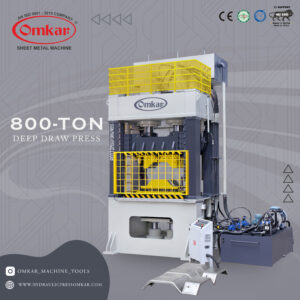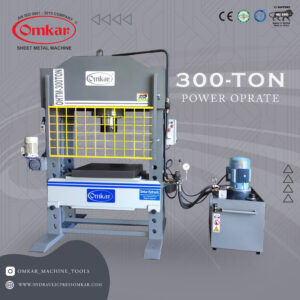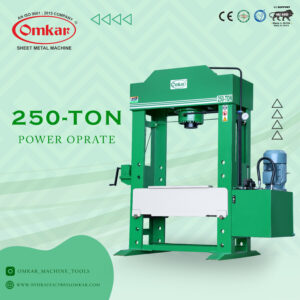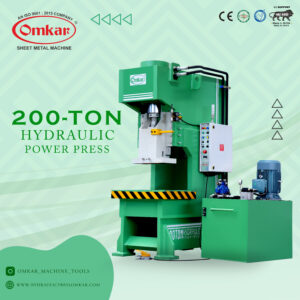
Built from the press bay up.
Balvant Hirpara's story is self-made. A first-generation industrialist with no inherited enterprise behind him, he chose hydraulic presses, chose Rajkot - Saurashtra's historic machine-tool capital - and chose the long path of building a category-defining engineering firm. Omkar Machine Tools, established in 2011, was the result.
The category was unforgiving. Hydraulic presses sell on tonnage, ram parallelism, stroke control, hydraulics reliability and how the machine behaves under continuous shift duty - not on price alone. Many Indian press builders stumble at the precision layer; Omkar chose to lead with it. Frames were designed for stable ram travel, hydraulic packs were specified to international quality standards, and the customers Balvant chose to court were those who would specify hard and stay long.
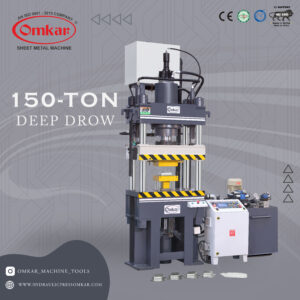
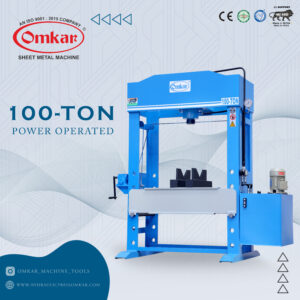
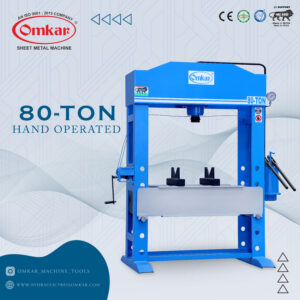
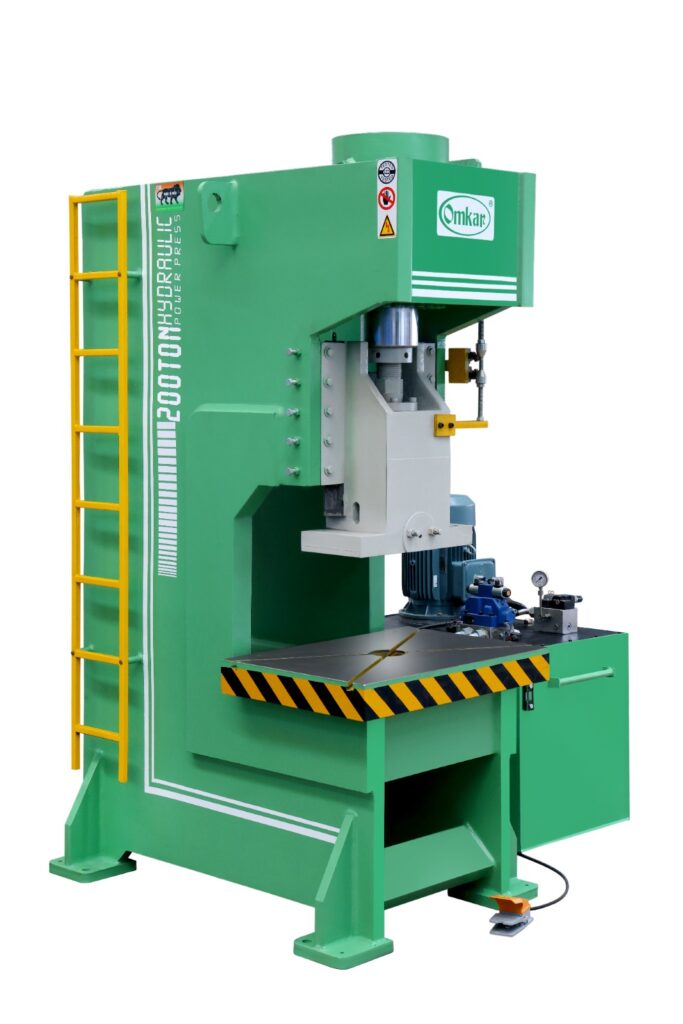
Today the company manufactures a full range of hydraulic presses - C-type and H-type from 3 to 500 tonnes, four-pillar and fixed-frame from 5 to 500 tonnes, deep-draw presses from 40 to 800 tonnes - plus scrap baling presses, rubber moulding machines, hydraulic shearing machines and press brakes. Around the press line, Balvant has built a manufacturing operation that runs on the basics: design quality, fabrication consistency, hydraulics reliability, on-time commissioning, and the slow compound of customer trust earned one machine at a time.
- 01Hydraulic press plantRibda - Gondal - Rajkot - 2011
- 02C-Type & H-Type press lines3 - 500 tonne capacity
- 03Four-pillar & deep-drawUp to 800 tonne, structural press work
- 04Shearing & press brakeSheet-metal cut, bend, form - paired or standalone
The press is old engineering. The discipline of getting every frame to spec, every commissioning on time - that is the actual work.
Capital placed on the shop floor.
Balvant's capital allocation reflects the same conviction that built Omkar Machine Tools: India needs more of certain things, and the businesses that deliver them well - with quality, with patience, with operating rigour - will compound for decades.
The capital sits in the plant - heavy fabrication and machining capacity, hydraulic test bays, assembly capability, the kind of engineering depth that lets a Rajkot machine-tool builder hold its own against larger national and international competitors. Capability is the asset. Working capital flows through it; capacity expansions are funded from internal accruals; and the operating cycle is run cash-positive.
The horizon is long. The capacity decisions taken today determine which tenders Omkar can quote next quarter and which industries can be onboarded next year. Capital placed for the long compound - not the short cycle - and placed in the only place that matters in a machine-tool business: design, fabrication and the press bay.
An open door for first-generation founders.
Balvant actively engages with younger founders in engineering, machine tools, hydraulics, contract manufacturing and the wider ecosystem of Saurashtra SMEs that supply India's industrial economy. As someone who built Omkar from the ground up in a margin-thin, precision-heavy category, he is candid about what the work actually takes.
The conversations are direct. Founders reach out for a view on hydraulic press design, frame fabrication, hydraulics pack selection, how to staff a test bay, how to handle the first export consignment, how to win the first automobile-component customer, or how to structure a family-run engineering firm for the next generation. He engages personally.
Beyond one-on-one mentorship, Balvant is a quiet contributor to the Rajkot engineering community - local trade bodies, the wider Saurashtra machine-tool ecosystem, and the CSR work the family has chosen to support. [verify CSR scope with promoter]
Open door - No agenda - No invoice.
For first-generation Indian founders building in engineering, machine tools, hydraulics and family-run manufacturing - the door stays open.
The promoter's job in a machine-tool business is to compound customer trust, one commissioning at a time.
- ISO 9001 is an operating culture, not a certificate on the wall.
- Capacity decisions today determine which customers exist next year.
- Indian machine tools compete globally on documented engineering, not on price alone.
- 01Setting up a hydraulic press manufacturing plant
- 02Frame design, hydraulics pack & ram-parallelism
- 03Test bay & commissioning discipline for first-time exporters
- 04Vendor development in the Rajkot - Gondal cluster
- 05Family enterprise - second-generation transitions
- 06ISO 9001 quality system in a job-shop machine-tool plant